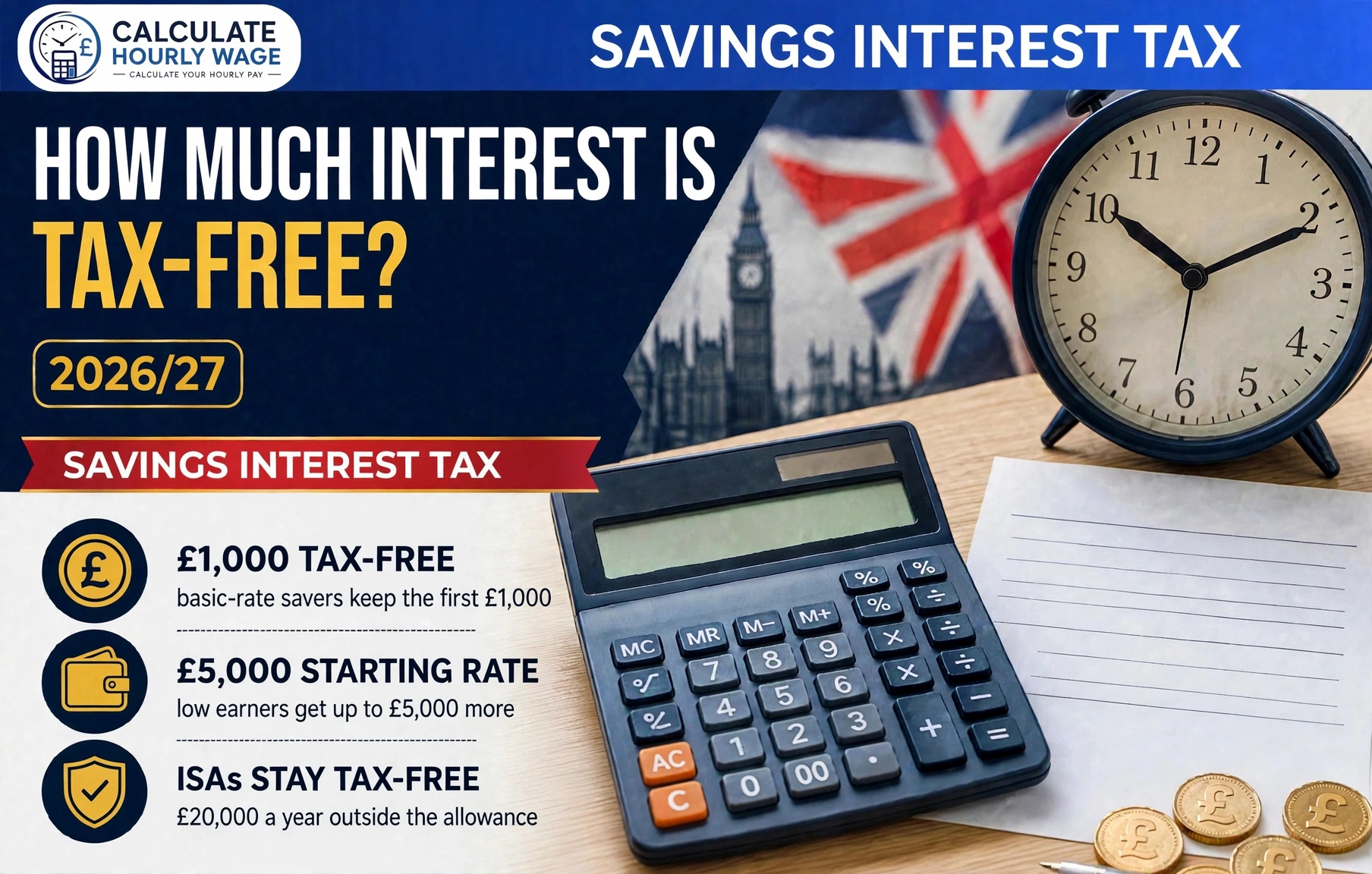
If you are wondering about the personal savings allowance in the uk, here is the direct answer: in 2026/27, most savers can earn some interest without paying any tax on it at all. Basic-rate taxpayers can earn up to £1,000 of savings interest tax-free, higher-rate taxpayers up to £500, and additional-rate taxpayers get no allowance. On top of that, lower earners can get up to £5,000 more tax-free through the starting rate for savings, and any interest earned inside an ISA is tax-free on top of everything else.
That means a typical worker with a savings account earning 4% interest would need £25,000 saved before a single pound of tax is due. A retiree on a small pension could shelter far more. Yet most people have never heard of either allowance, so they either worry about tax they will never owe — or quietly pay tax they never needed to.
This guide explains the personal savings allowance in the uk in plain language: the three amounts, how the starting rate stacks on top, worked examples for a basic-rate saver, a higher-rate saver and a low earner, how ISAs fit in, and how HMRC collects the tax when you do owe some.
The Short Answer: How Much Savings Interest Is Tax-Free?
For 2026/27, the amount of savings interest you can earn tax-free depends on which Income Tax band you are in:
| Income Tax band | Total income | Personal Savings Allowance |
|---|---|---|
| Basic rate | £12,571 to £50,270 | £1,000 |
| Higher rate | £50,271 to £125,140 | £500 |
| Additional rate | Over £125,140 | £0 |
Interest inside your allowance is taxed at 0%. Interest above it is taxed at your usual Income Tax rate — 20%, 40% or 45% in 2026/27. The allowance is per person, per tax year, and covers all your accounts added together: three accounts paying £400 each is £1,200 in total, and as a basic-rate taxpayer only £200 of it is taxable.
There is a second allowance many people miss: if your other taxable income — wages, pension, rent, anything that is not savings interest or dividends — is less than £17,570, you also get the starting rate for savings, up to £5,000 of interest at 0%. The two stack, so a low earner can receive up to £6,000 of savings interest tax-free, and someone whose only income is savings interest up to £18,570.
What Is the Personal Savings Allowance?
The Personal Savings Allowance, usually shortened to PSA, is a tax-free amount of savings interest you can receive each year. It has been in place since April 2016, when banks stopped deducting tax from interest before paying it to you: since then, interest is paid gross, and HMRC works out whether any tax is due.
Your band — and therefore your allowance — is worked out from your total taxable income for the year, including the interest itself. GOV.UK puts it plainly: to work out your tax band, add all the interest you have earned to your other income. So if your salary is £49,000 and you earn £2,000 of interest, your total income is £51,000, which puts you in the higher-rate band, and your allowance is £500, not £1,000. The interest itself can push you over a threshold.
The allowance is per person, not per account and not per household. A couple each get their own allowance, so between them a basic-rate couple can shelter £2,000 of interest a year. You cannot transfer an unused allowance to your partner, but you can move savings into the lower-earning partner’s name. Note that interest inside the allowance still counts as income when HMRC works out your tax band, and towards the High Income Child Benefit Charge and the loss of the Personal Allowance above £100,000.
How the Personal Savings Allowance Works in Practice
GOV.UK’s example shows the mechanics: HMRC estimates you earned £1,300 of savings interest, and as a basic-rate taxpayer your allowance is £1,000. The first £1,000 is not taxed, the remaining £300 is taxed at 20%, and the tax due is £60. Allowance first, then your marginal rate on the rest — that is how the personal savings allowance in the uk works in practice.
You will rarely do this calculation yourself: your bank tells HMRC how much interest you earned after the year ends, and HMRC either adjusts your tax code or sends you a tax calculation letter. Keep a rough running total across all your accounts and compare it with your allowance.
To put the allowance in perspective, here is the balance at which a saver at 4% interest starts paying tax:
| Tax band | Allowance | Balance earning 4% that uses it up |
|---|---|---|
| Basic rate | £1,000 | £25,000 |
| Higher rate | £500 | £12,500 |
| Additional rate | £0 | £0 — tax from the first pound |
At 5% interest the numbers fall to £20,000 and £10,000. With easy-access rates around 4% to 5%, a basic-rate saver with £20,000 is now close to the line, and a higher-rate saver crosses it with barely £12,000 saved. That is why an allowance that once sheltered almost everyone now matters to millions of ordinary savers.
The Starting Rate for Savings: Up to £5,000 More Tax-Free
The starting rate for savings is the allowance most people have never heard of, and for low earners it is worth five times as much as the Personal Savings Allowance: a separate 0% band of up to £5,000 on savings interest, available when your other taxable income is below £17,570.
The rule, from GOV.UK, is straightforward: if your other taxable income — not including savings interest or dividends — is less than £17,570, you can get the starting rate for savings, which means you can earn up to £5,000 of interest and not have to pay tax on it. The more you earn from other income, the less starting rate you get: every £1 of other income above your £12,570 Personal Allowance reduces your starting rate by £1. At £17,570 of other income it is gone entirely.
| Other taxable income | Starting rate available |
|---|---|
| £12,570 or less | Full £5,000 |
| £13,570 | £4,000 |
| £15,570 | £2,000 |
| £16,570 | £1,000 |
| £17,570 or more | £0 |
GOV.UK’s example: you earn £16,000 of wages and £200 of interest. Your Personal Allowance is used up by the first £12,570 of wages; the remaining £3,430 reduces your starting rate by £3,430, leaving £1,570 — which covers your £200 of interest completely, so no tax is due.
The starting rate stacks with the Personal Savings Allowance: savings interest passes through the available 0% layers in turn — any unused Personal Allowance first, then the starting rate, then the Personal Savings Allowance. For someone whose other income is exactly £12,570, the combination is £5,000 of starting rate plus the £1,000 allowance — £6,000 of interest tax-free. For someone whose income is entirely savings interest, all three layers stack: £12,570 of Personal Allowance, plus £5,000 starting rate, plus the £1,000 allowance — £18,570 of interest with no tax due.
Worked Example 1: A Basic-Rate Taxpayer with £30,000 Saved
Take Emma. She earns £32,000 a year and has £30,000 in an easy-access savings account paying 4%. Her interest for the year is £30,000 × 4% = £1,200.
Her total income is £33,200 — comfortably inside the basic-rate band, so her Personal Savings Allowance is £1,000. Her other income is far above £17,570, so she gets no starting rate.
The first £1,000 of her interest is covered by the allowance and taxed at 0%. The remaining £200 is taxed at her basic rate of 20%, which is £40. Her total tax on £1,200 of interest is £40 — an effective rate of just 3.3%.
If she moved £10,000 of that £30,000 into a cash ISA, her taxable interest would fall to £800, entirely inside her £1,000 allowance — no tax at all. For a basic-rate taxpayer, the allowance does the heavy lifting up to £25,000 of savings at 4%, and the ISA is what keeps the rest tax-free. Add up your own taxable income with our taxable income calculator to see which band you are in.
Worked Example 2: A Higher-Rate Taxpayer with £20,000 Saved
Take David. He earns £60,000 a year and has £20,000 in a fixed-rate bond paying 4.5%. His interest for the year is £20,000 × 4.5% = £900.
His total income is £60,900, so he is a higher-rate taxpayer with a £500 allowance and no starting rate. The first £500 of his interest is tax-free; the remaining £400 is taxed at 40%, which is £160. His total tax on £900 of interest is £160 — an effective rate of nearly 18%, far higher than Emma’s, because his allowance is half the size and his marginal rate is double.
If the same £20,000 sat in a cash ISA instead, the whole £900 would be tax-free, saving him £160 a year. A higher-rate taxpayer crosses the £500 allowance with just £12,500 saved at 4%, so almost any meaningful savings balance produces a tax bill outside an ISA.
A second trap for higher earners: interest counts towards total income, so it can push you over the £100,000 line where the Personal Allowance tapers away, or over £125,140, where the additional rate begins and the allowance disappears entirely. Our annual salary calculator shows where your total income sits against those thresholds.
Worked Example 3: A Low Earner Stacking All Three Layers
Take Margaret. She is retired on a State Pension and a small workplace pension totalling £10,000 a year, and she has £60,000 in savings earning 4%, which pays £2,400 of interest.
Her other income of £10,000 is below the £12,570 Personal Allowance, so £2,570 of it is unused and applies to her interest first. It is also below £17,570, so she gets the full £5,000 starting rate. And because her total income, including the interest, stays inside the basic-rate band, her Personal Savings Allowance is £1,000.
The three layers add up to £8,570 of interest she can receive tax-free — £2,570 of unused Personal Allowance, £5,000 of starting rate and the £1,000 allowance. Her actual interest is only £2,400, so she owes no tax at all, and could earn another £6,170 before a single pound became taxable.
This is the position many pensioners are in without realising it: a modest pension, a lifetime of savings, and a tax code that takes tax on interest they never owed. If that sounds like you, or like a parent, check the tax code and the Personal Tax Account — HMRC’s estimate is based on what your bank reported last year, and if your balance or rate has changed, it may be wrong.
ISAs: Interest That Never Touches Your Allowance
An ISA — an Individual Savings Account — is the one place where savings interest is completely outside the tax system: you pay no tax on interest on cash in an ISA, you do not declare it on a tax return, and it does not use up any of your Personal Savings Allowance.
For 2026/27, the maximum you can save in ISAs is £20,000 per person per tax year. You can put the whole £20,000 into one account or split it across different types — a cash ISA, a stocks and shares ISA, an innovative finance ISA and a Lifetime ISA, with no more than £4,000 a year into a Lifetime ISA. The allowance is use-it-or-lose-it: whatever you do not use by 5 April is gone.
For most savers the cash ISA is the direct answer: a basic-rate taxpayer with £25,000 saved at 4% earns £1,000 of interest — exactly the allowance — and every pound above that balance is taxable outside an ISA and tax-free inside one.
One change is worth knowing for April 2027: the government had planned to limit cash ISA payments to £12,000 a year for savers under 65, but at Budget 2026 on 28 October 2026 that limit was dropped, so adults of any age can still pay up to the full £20,000 a year into cash ISAs. The overall £20,000 allowance itself is unchanged.
Joint Accounts and Children’s Savings
A joint account does not get a double allowance. HMRC normally splits the interest on a joint account equally between the holders — 50/50 for a two-person account — and each person’s share counts against their own Personal Savings Allowance. So a couple with a joint account earning £1,800 of interest each have £900 counted against their own allowance, and if both are basic-rate taxpayers, no tax is due at all. Moving savings into the lower earner’s sole name can shelter more, but it is a real transfer of the money, so both partners need to agree.
Children’s savings are taxed as the child’s own, with their own allowances — unless the money came from a parent and the interest is more than £100 a year, in which case HMRC taxes it as the parent’s income. A Junior ISA sidesteps that rule entirely, since interest inside it is tax-free. Gifts from grandparents are taxed as the child’s income without the £100 rule.
What Counts as Savings Interest?
Most interest counts towards the allowance: bank and building society accounts; National Savings & Investments products such as Income Bonds; credit union dividends, which HMRC treats as savings interest; peer-to-peer lending; and interest on money you have lent to someone else.
Two common items do not count: interest inside an ISA, which is tax-free and never touches the allowance, and Premium Bond prizes, which are prizes, not interest, so a win costs no tax even for an additional-rate taxpayer. Dividends from shares are separate, with their own £500 allowance for 2026/27, and do not count towards your Personal Savings Allowance. Our guide on what counts as taxable income in the uk explains how the different types of income fit together.
How HMRC Collects the Tax
Since April 2016, banks pay your interest gross, without deducting tax. HMRC collects any tax afterwards, and the method depends on how much interest you earned.
If your savings interest is £10,000 or less, your bank tells HMRC after the year ends. If you are employed or get a pension, HMRC usually collects the tax through your tax code: they send a tax calculation, usually between June and the following March, and your code is changed to collect what you owe and to include an estimate of the current year’s interest. If you have no tax code, or it cannot be changed, HMRC may send a Simple Assessment letter instead.
If your savings interest is more than £10,000, you need to tell HMRC on a Self Assessment tax return. If your bank reports more than £10,000, HMRC will send you a notice to file a return.
Check the estimate in your tax code: HMRC builds it from the interest your bank reported last year, and if your balance or rate has changed, it can be wrong. You can see the estimate in your Personal Tax Account on GOV.UK — compare it with your average monthly interest multiplied by 12, and if it looks wrong, contact HMRC and you will get a new tax code. Our guide on how to read your payslip shows where the tax code sits on your payslip and how to spot when it has changed. Savings interest does not affect your National Insurance — NI is charged on earnings, not on interest — so the two are worked out separately, and our National Insurance calculator shows the earnings side.
If you have overpaid — for example because your starting rate should have covered the interest — HMRC will usually send a tax calculation letter after the tax year ends, and you can claim the refund online through your Personal Tax Account, with the money typically arriving by bank transfer within about five working days. If you have not received a letter by 31 March of the following tax year and you believe you have tax to pay, GOV.UK says you must contact HMRC yourself.
Savings Tax Rates from April 2027
One change is already confirmed for the next tax year. From 6 April 2027, the tax rates on savings interest above your allowances rise: the basic rate goes from 20% to 24%, the higher rate from 40% to 44%, and the additional rate from 45% to 49%. The Personal Savings Allowance itself does not change — it stays at £1,000 for basic-rate taxpayers and £500 for higher-rate taxpayers — and the £5,000 starting rate stays the same too.
Emma’s £200 of taxable interest would cost £48 instead of £40; David’s £400 would cost £176 instead of £160. The allowances shelter the same amount, but every pound above them is taxed harder — which makes the ISA, and the starting rate for low earners, worth more than they are today.
The Bottom Line on the Personal Savings Allowance in the UK
The personal savings allowance in the uk is simple: £1,000 of tax-free interest for basic-rate taxpayers, £500 for higher-rate taxpayers, and nothing for additional-rate taxpayers. Low earners get up to £5,000 more through the starting rate, stacking with any unused Personal Allowance — up to £18,570 tax-free for someone whose only income is savings. ISAs sit outside all of it, with £20,000 a year of tax-free shelter on top.
The mistake to avoid is assuming the allowance means you never owe tax: once your balance passes £25,000 at 4% as a basic-rate taxpayer, or £12,500 as a higher-rate taxpayer, interest above the allowance is taxed at your marginal rate — and from April 2027, at 24%, 44% and 49%. Check your total interest once a year, compare it with your allowance, and move money into an ISA before the tax year ends if you are over the line. Work out your own taxable income with our taxable income calculator, and if the numbers show you have overpaid, our income tax refund calculator can help you estimate what is due back.
Frequently Asked Questions
What is the personal savings allowance in the uk?
The Personal Savings Allowance is the amount of savings interest you can earn tax-free each year. For 2026/27 it is £1,000 for basic-rate taxpayers, £500 for higher-rate taxpayers and £0 for additional-rate taxpayers. Interest above the allowance is taxed at your usual Income Tax rate — 20%, 40% or 45% in 2026/27.
How much interest can I earn tax-free on my savings?
It depends on your income. A basic-rate taxpayer gets £1,000 tax-free through the Personal Savings Allowance. If your other income is below £17,570, you can also get up to £5,000 tax-free through the starting rate for savings, and any unused Personal Allowance counts too — so a low earner can receive up to £6,000 of interest tax-free, or £18,570 if savings interest is their only income. Interest inside an ISA is tax-free on top of all of that.
Does the Personal Savings Allowance apply to ISAs?
No — and that is the point. Interest inside an ISA is completely tax-free and does not use any of your Personal Savings Allowance, so the allowance stays free for interest earned outside the ISA. You can pay up to £20,000 a year into ISAs in 2026/27, and the allowance is use-it-or-lose-it each tax year.
Do I need to tell HMRC about my savings interest?
Usually not, if it is £10,000 or less — your bank tells HMRC, and the tax is normally collected through your tax code or a Simple Assessment letter. If your savings interest is more than £10,000, you need to report it on a Self Assessment tax return. Check the estimate in your Personal Tax Account, because it is based on last year’s interest and may be wrong if your balance or rate has changed.
What is the starting rate for savings?
The starting rate for savings is a separate 0% band of up to £5,000 on savings interest, for people whose other taxable income — wages, pension, rent, but not savings interest or dividends — is below £17,570. It shrinks by £1 for every £1 of other income above the £12,570 Personal Allowance, and it stacks with the Personal Savings Allowance.
Will I pay more tax on savings interest from April 2027?
Yes, if your interest is above your allowances. From 6 April 2027 the rates rise from 20% to 24% for basic-rate taxpayers, 40% to 44% for higher-rate taxpayers and 45% to 49% for additional-rate taxpayers. The Personal Savings Allowance (£1,000 / £500 / £0) and the £5,000 starting rate do not change, so the same amount stays tax-free — but every pound above the allowances costs more.
Sources
- GOV.UK — Tax on savings interest: how much is tax free (Personal Savings Allowance £1,000 / £500 / £0; starting rate for savings up to £5,000; worked examples): https://www.gov.uk/apply-tax-free-interest-on-savings/how-much-is-tax-free
- GOV.UK — Tax on savings interest: how you pay tax on savings interest (tax code collection, Simple Assessment, Self Assessment above £10,000): https://www.gov.uk/apply-tax-free-interest-on-savings/how-you-pay-tax-on-savings-interest
- GOV.UK — Tax on savings interest (overview): https://www.gov.uk/apply-tax-free-interest-on-savings
- GOV.UK — Income Tax rates and Personal Allowances (Personal Allowance £12,570; 20% / 40% / 45% bands for 2026/27): https://www.gov.uk/income-tax-rates
- GOV.UK — Individual Savings Accounts (ISAs) (£20,000 allowance for 2026/27; ISA interest tax-free): https://www.gov.uk/individual-savings-accounts