UK Tax Brackets 2026/27
The UK income tax system is progressive: you only pay a higher rate on the slice of income that falls inside that band, never on your whole salary. Here's every bracket for the 2026/27 tax year (6 April 2026 to 5 April 2027), for England, Wales, Northern Ireland and Scotland, with worked examples so you can see exactly what you'd pay.
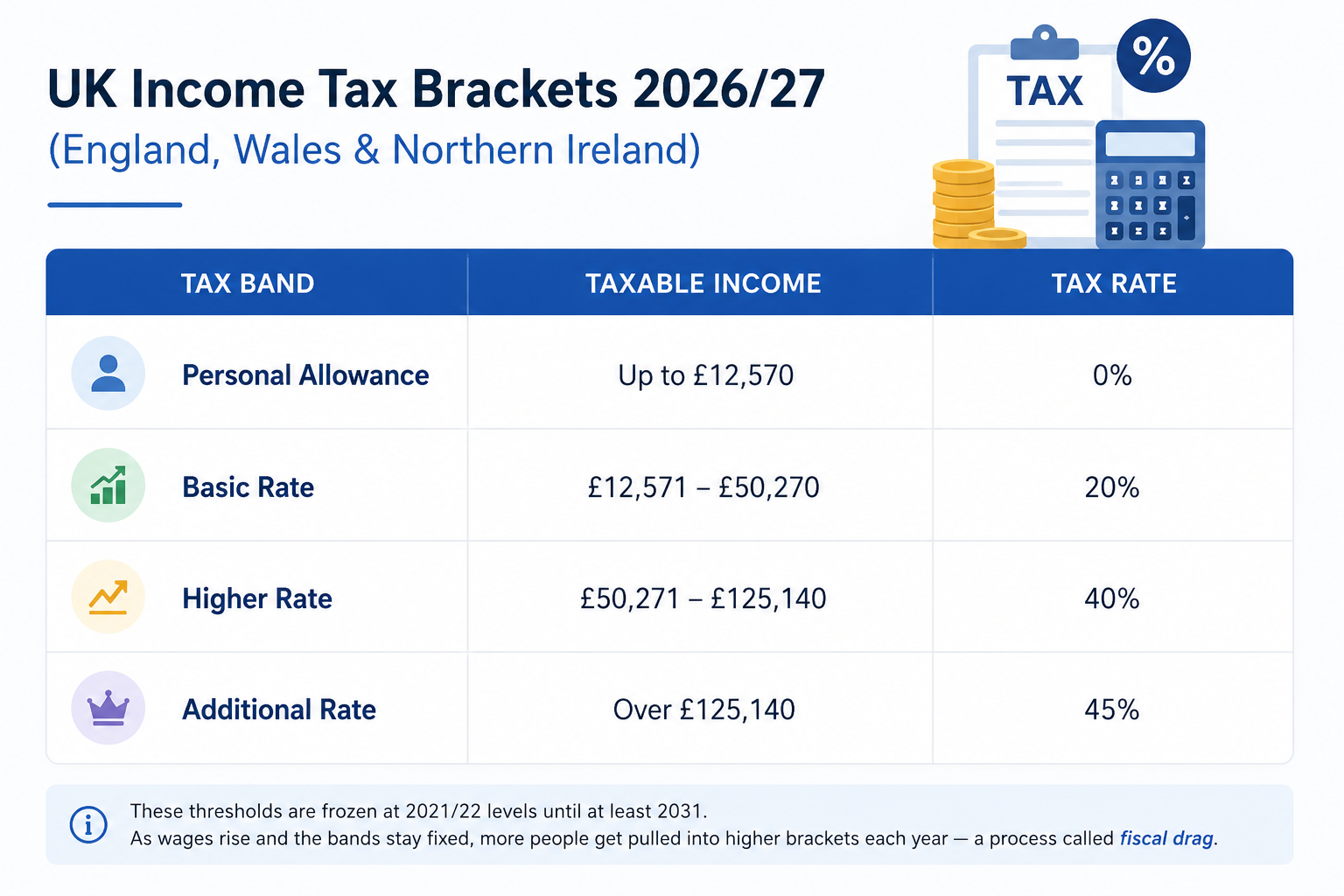
UK Income Tax Brackets 2026/27 (England, Wales & Northern Ireland)
| Tax Band | Taxable Income | Tax Rate |
|---|---|---|
| Personal Allowance | Up to £12,570 | 0% |
| Basic Rate | £12,571 – £50,270 | 20% |
| Higher Rate | £50,271 – £125,140 | 40% |
| Additional Rate | Over £125,140 | 45% |
These thresholds are frozen at 2021/22 levels until at least 2031. As wages rise and the bands stay fixed, more people get pulled into higher brackets each year — a process called fiscal drag.
Scotland Income Tax Brackets 2026/27
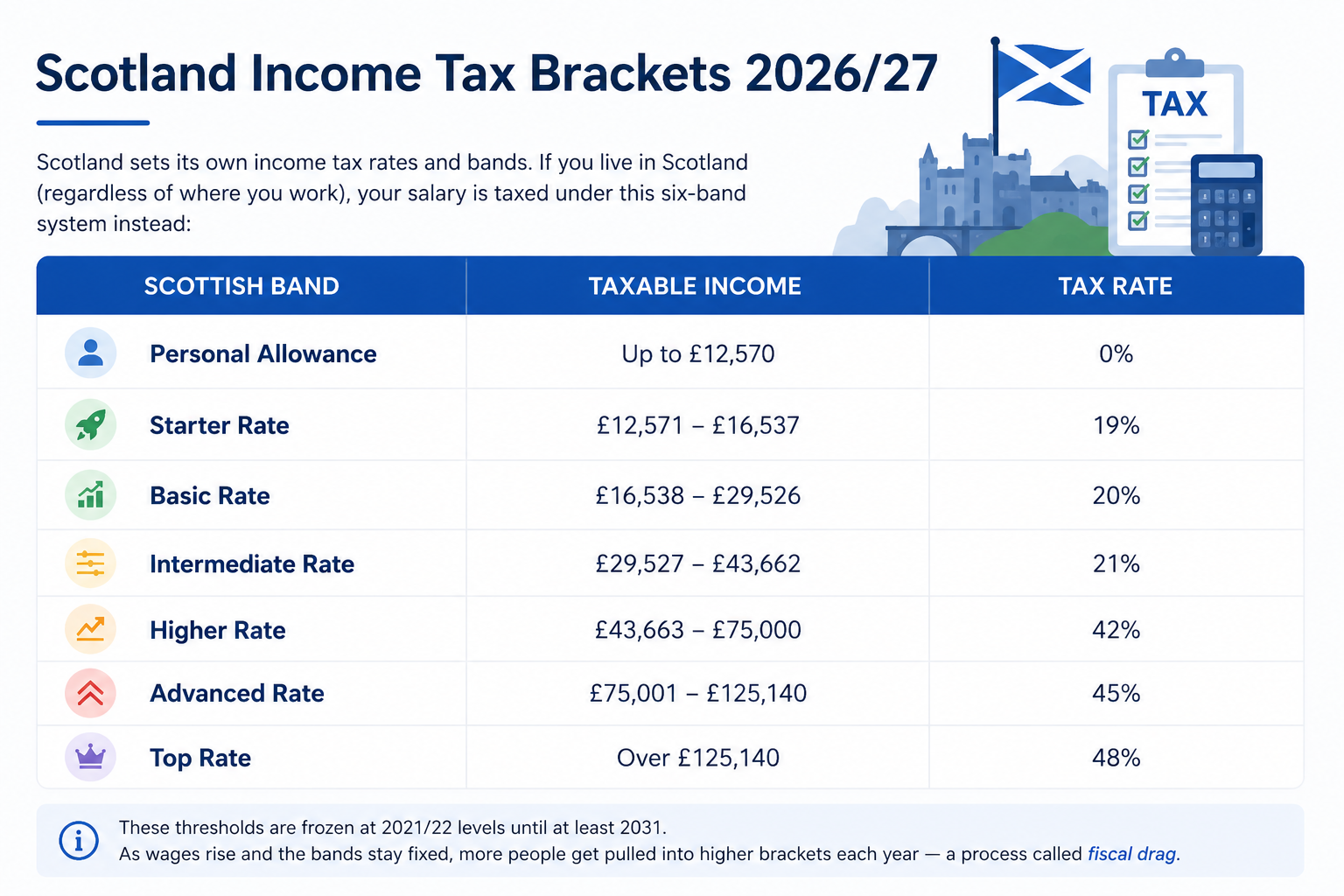
Scotland sets its own income tax rates and bands. If you live in Scotland (regardless of where you work), your salary is taxed under this six-band system instead:
| Scottish Band | Taxable Income | Tax Rate |
|---|---|---|
| Personal Allowance | Up to £12,570 | 0% |
| Starter Rate | £12,571 – £16,537 | 19% |
| Basic Rate | £16,538 – £29,526 | 20% |
| Intermediate Rate | £29,527 – £43,662 | 21% |
| Higher Rate | £43,663 – £75,000 | 42% |
| Advanced Rate | £75,001 – £125,140 | 45% |
| Top Rate | Over £125,140 | 48% |
How UK Tax Brackets Actually Work
Here's the misconception almost everyone starts with:
"If I cross into the higher-rate threshold, my whole salary gets taxed at 40%."
That's not how it works. UK tax bands are marginal — each rate only applies to the portion of income that falls inside that band.
| Salary / Calculation | Amount |
|---|---|
| Example: £35,000 salary (England, Wales or NI) | £35,000 |
| First £12,570 → tax-free (Personal Allowance) | £12,570 |
| Remaining £22,430 → taxed at 20% = £4,486 | £4,486 |
| Total income tax: £4,486. Not £35,000 × 20%. | £4,486 |
Only the amount above your Personal Allowance is taxable, and it's taxed band by band.
Personal Allowance: The Standard Rule and the Taper
| Personal Allowance Calculation | Amount |
|---|---|
| Standard Personal Allowance for 2026/27 | £12,570 |
| Income threshold where allowance starts to shrink | £100,000 |
| Reduction rate | £1 for every £2 earned above £100,000 |
| Income | £110,000 |
| Reduction = (£110,000 − £100,000) ÷ 2 = £5,000 | £5,000 |
| Personal Allowance = £12,570 − £5,000 = £7,570 | £7,570 |
| Income where Personal Allowance reaches £0 | £125,140 |
Tax Bracket Examples at Different Salaries
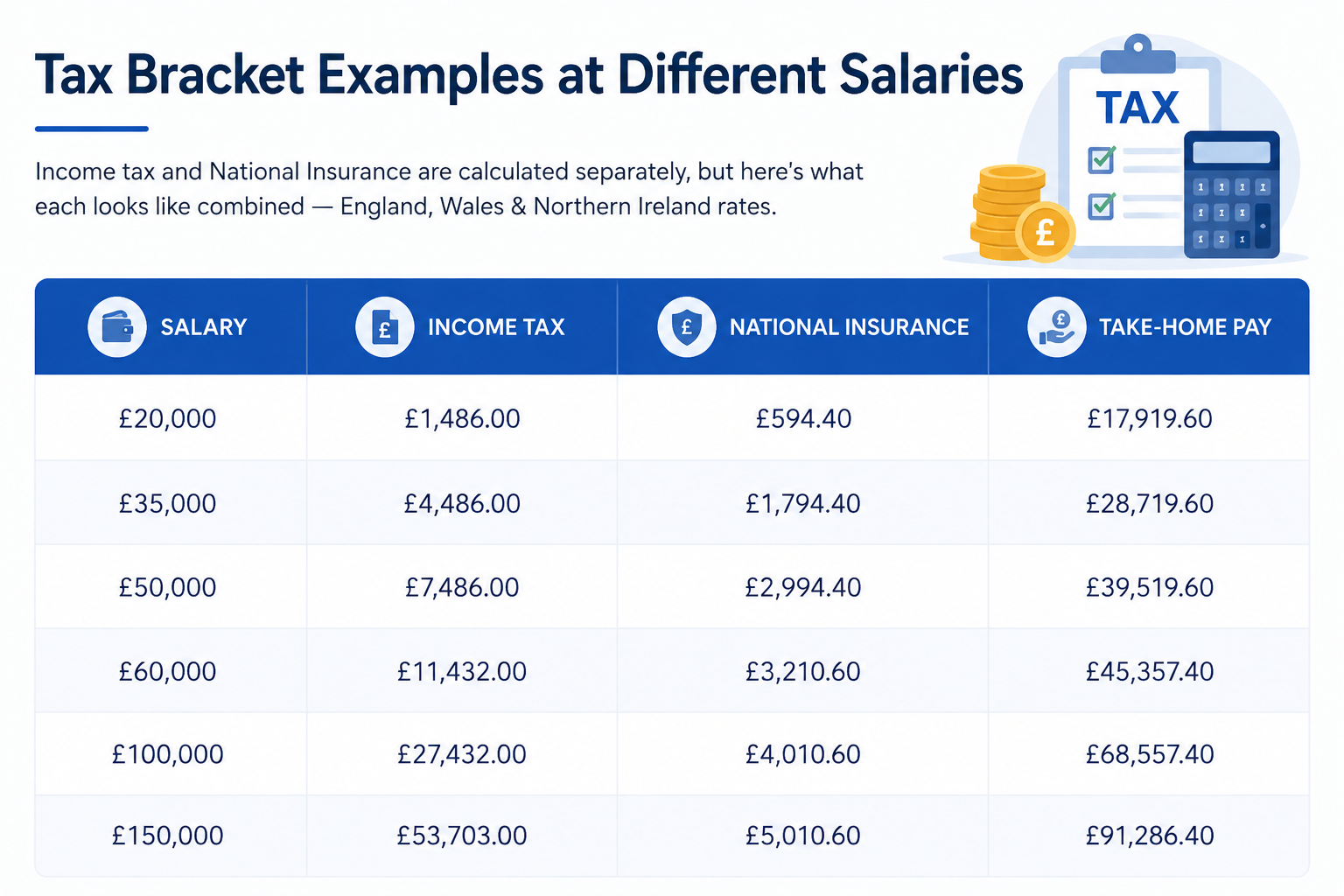
Income tax and National Insurance are calculated separately, but here's what each looks like combined — England, Wales & Northern Ireland rates.
| Salary | Income Tax | National Insurance | Take-Home Pay |
|---|---|---|---|
| £20,000 | £1,486.00 | £594.40 | £17,919.60 |
| £35,000 | £4,486.00 | £1,794.40 | £28,719.60 |
| £50,000 | £7,486.00 | £2,994.40 | £39,519.60 |
| £60,000 | £11,432.00 | £3,210.60 | £45,357.40 |
| £100,000 | £27,432.00 | £4,010.60 | £68,557.40 |
| £150,000 | £53,703.00 | £5,010.60 | £91,286.40 |
Frequently Asked Questions
Find answers to the most common questions about UK tax brackets, allowances, and rates.