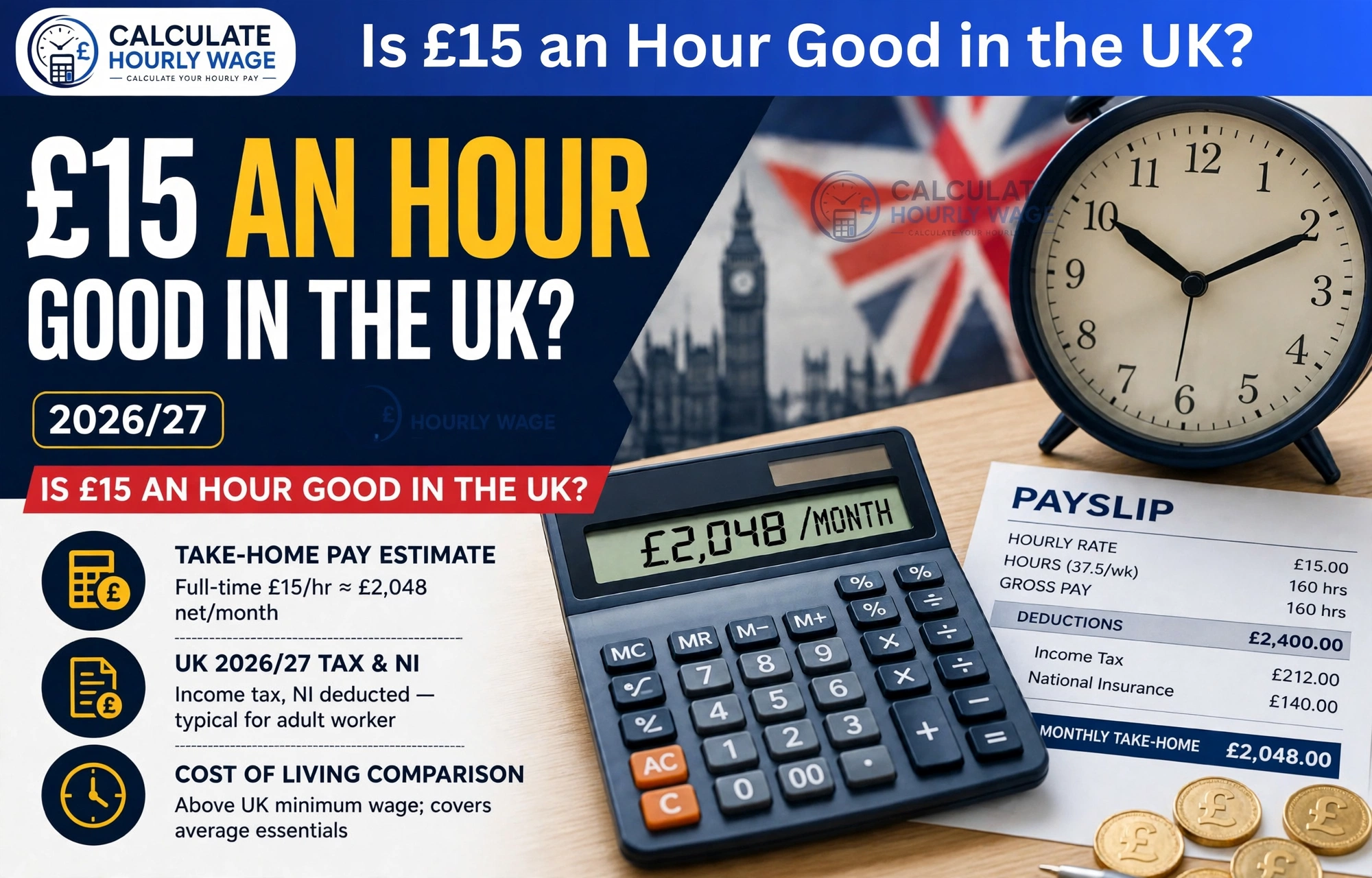
Is £15 an hour good? Yes — for most people, £15 an hour is a good wage in the UK. It sits comfortably above the legal minimum, and worked full-time, it gives you roughly £2,048 a month in your pocket after tax and National Insurance. That is enough for a single person to live on in most parts of the country, though in London and for a family on one income, it can feel tight.
But the honest answer is that “good” depends on three things: how many hours you work, where you live, and who else depends on your pay. An hourly rate on its own does not tell the full story. Someone on £15 an hour working 40 hours a week is in a very different position from someone on the same rate working 16 hours a week. This guide works through the real numbers — gross pay, take-home pay, and how £15 compares with the legal minimum — so you can judge it against your own situation.
What £15 an Hour Works Out As in Real Money
Hourly rates are hard to picture until you turn them into monthly and yearly amounts. The table below assumes you are paid for 52 weeks of the year, which includes paid holiday. Most employed jobs include at least 5.6 weeks of paid annual leave, so your yearly pay does not drop when you take time off.
| Hours per week | Gross pay per year | Take-home pay per year | Take-home pay per month |
|---|---|---|---|
| 20 hours (part-time) | £15,600 | £14,752 | £1,229 |
| 37.5 hours (typical full-time) | £29,250 | £24,580 | £2,048 |
| 40 hours (full-time) | £31,200 | £25,984 | £2,165 |

Take-home figures here are estimates for England, Wales and Northern Ireland, using the standard tax code and no pension contributions, student loan repayments or other deductions. Scotland sets its own Income Tax bands, so Scottish workers will see slightly different numbers. Your own payslip may also differ a little, for reasons explained below.
The first thing to notice is the gap between gross and take-home pay. On a full-time 37.5-hour week, about £4,670 a year goes on Income Tax and National Insurance combined. That is roughly 16% of your gross pay. It is worth knowing this before you accept a job, because it is the take-home figure — not the hourly rate — that pays your rent and bills.
If you want to check the numbers for your own hours, use our hourly wage calculator to convert any hourly rate into weekly, monthly and yearly pay. Use it to check for yourself: is £15 an hour good for your hours and situation?
£15 an Hour After Tax and National Insurance
Here is the maths, step by step, for a full-time worker on £15 an hour doing 37.5 hours a week.
Step 1: Gross pay. £15 × 37.5 hours × 52 weeks = £29,250 a year.
Step 2: Income Tax. Everyone gets a tax-free Personal Allowance, which is £12,570 for the 2026/27 tax year. You only pay tax on what you earn above that. So £29,250 minus £12,570 leaves £16,680 of taxable income. All of that falls inside the basic rate band, which is charged at 20%. That gives Income Tax of £3,336 a year.
Step 3: National Insurance. As an employee, you pay National Insurance at 8% on earnings between £12,570 and £50,270 a year, and 2% on anything above that. Your £16,680 of earnings above the threshold is charged at 8%, which comes to £1,334.40 a year.
Step 4: Take-home pay. £29,250 − £3,336 − £1,334.40 = £24,579.60, which we round to £24,580 a year, or about £2,048 a month.
Two things can make your actual payslip look slightly different. First, Income Tax is worked out across the whole tax year, while National Insurance is worked out separately in each pay period, so an uneven month — a bonus, for example — can change the NI figure for that month. Second, pension contributions, student loan repayments and any salary sacrifice arrangement all come off before or alongside tax, and they will reduce the amount that lands in your bank account. A workplace pension is usually worth keeping, because your employer adds money on top of yours, but it does lower your monthly take-home.
The rates used here come from GOV.UK: the standard Personal Allowance of £12,570, the basic rate of 20% on taxable income between £12,571 and £50,270, and the employee National Insurance rates of 8% and 2%. You can check them on the GOV.UK Income Tax rates page and the GOV.UK rates and thresholds for employers.
How £15 an Hour Compares With the Legal Minimum
The National Living Wage for workers aged 21 and over is £12.71 an hour from 1 April 2026. That is the legal floor — your employer cannot pay you less than that if you are 21 or older, whatever the job. At £15 an hour, you are earning £2.29 an hour more than the minimum. That works out at about 18% above the legal floor.
Over a full-time year, the difference adds up. A worker on the National Living Wage doing 37.5 hours a week earns £24,785 gross a year. The same worker on £15 an hour earns £29,250 — a gap of about £4,466 a year before tax. After tax and National Insurance, the £15-an-hour worker takes home roughly £268 a month more. In short, is £15 an hour good compared with the legal minimum? Yes — by £2.29 an hour for workers aged 21 and over.
The comparison is even stronger for younger workers. The minimum rate for 18 to 20-year-olds is £10.85 an hour, and for 16 to 17-year-olds it is £8.00 an hour. So if you are 19 and earning £15 an hour, you are well above the minimum your employer is legally required to pay you. That is a strong position to be in at the start of your working life.
You may also hear about a voluntary Real Living Wage. This is a rate set by the Living Wage Foundation, not by the government, and employers can choose whether to pay it. It is not a legal requirement, and it is not the same thing as the National Living Wage, even though the names sound similar. If an employer advertises itself as a Real Living Wage employer, it has chosen to pay above the legal floor. The official, enforceable figure is always the National Living Wage.
One warning: the legal minimum is worked out on your average hourly pay, not just your headline rate. If you are paid £15 an hour but you regularly work unpaid overtime, or you have to pay for your own uniform or travel in a way that brings your effective rate down, your average could fall below the minimum. GOV.UK has guidance on how to check whether you are being paid the minimum wage, and it is worth reading if anything about your pay looks off.
Is £15 an Hour Good Enough to Live On?
This is where the question ‘is £15 an hour good’ gets personal, because the same wage stretches very differently depending on your circumstances.

For a single person living outside London, £15 an hour full-time is generally enough to live on. Around £2,048 a month of take-home pay covers a room in a shared house or a small flat in many towns, plus bills, food, transport and a bit left over — as long as you are not carrying expensive debts. It will not feel luxurious, and saving for a deposit or a holiday will take discipline, but the basics are covered. For a single person, then, is £15 an hour good? On full-time hours, yes.
In London, the same wage is much tighter. Rent takes a far bigger share of your income, and even a room in a shared flat can eat up half your take-home pay. Plenty of people do live in London on £15 an hour, but it usually means sharing, watching food and travel costs closely, and having little room for unexpected bills. If you are weighing up a London job at £15 an hour against a similar job elsewhere, the cheaper rent outside the capital often matters more than a small difference in the hourly rate.
For a couple where both partners work, two incomes at £15 an hour — roughly £4,096 a month combined take-home — give a household a reasonably comfortable life in most of the country. For a family living on a single £15-an-hour income, life is harder. Childcare costs alone can swallow a large part of one wage, and a single income has to stretch across rent, food, bills and everything children need. Families in this position often qualify for some top-up support, such as Universal Credit or help with childcare costs, and it is worth checking what you are entitled to rather than assuming you have to manage on wages alone.
Whatever your situation, three habits make £15 an hour go further. First, check your tax code. If you are on an emergency tax code, you may be paying too much tax and getting less each month than you should. Second, build a small emergency buffer before anything else — even £20 a week set aside means a broken phone or a car repair does not turn into debt. Third, review the big fixed costs once a year: rent at renewal time, energy supplier, and any subscriptions you no longer use. Those are the bills that quietly eat a wage. These habits help whatever your answer to ‘is £15 an hour good’ is for your household.
Full-Time vs Part-Time on £15 an Hour
The hourly rate is only half the equation. Hours are the other half, and they change everything.
At 20 hours a week, £15 an hour gives you about £1,229 a month after tax and National Insurance. That can work well as a second household income, or for a student, or for someone whose living costs are low. As a sole income, though, it is hard to cover rent and bills on £1,229 a month in most places, and you would likely need additional support or a second job.
At 37.5 or 40 hours a week, the same rate gives you £2,048 to £2,165 a month, which is a different life altogether. This is why two job offers with the same hourly rate are not equal: always multiply the rate by the hours before you compare. A £14-an-hour job at 40 hours a week pays more in total than a £15-an-hour job at 35 hours. So is £15 an hour good? On full-time hours, yes; on part-time hours, it depends on what else your household earns.
Irregular hours bring their own problems. If your hours change week to week, your monthly pay changes too, which makes budgeting harder. It helps to work out your average month over a few months rather than trusting a single good or bad week. Workers with irregular hours also build up holiday differently, accruing it as they work rather than receiving a fixed annual allowance — something to be aware of if you are on a zero-hours or variable-hours contract.
It is also worth remembering what sits behind the hourly rate. An employed job usually comes with paid annual leave, sick pay arrangements, and employer pension contributions, all of which have real cash value. A slightly lower hourly rate in a job with those benefits can be worth more overall than a higher rate in a role with none of them, so compare the whole package, not just the headline number.
How to Earn More Than £15 an Hour
If £15 an hour is not quite enough for the life you want, there are a few realistic routes to more money.
Overtime is the quickest one. Many employers pay extra for hours beyond your normal working week, and even a few extra hours a month can lift your take-home noticeably. One thing to know: the government does not set an overtime rate. There is no legal “time and a half” rule in the UK — any overtime premium comes from your contract or your employer’s policy, so check what yours says before counting on it. Our overtime pay calculator can help you work out what extra hours would be worth.
Shift work is another route. Evening, night and weekend shifts often attract extra pay, because fewer people want those hours. If you already work shifts, check whether your employer pays an unsocial-hours premium you are not claiming.
Longer term, skills and qualifications are what move your rate up properly. A short course, a licence for a particular type of work, or experience in a shortage area can be the difference between £15 and £18 or £20 an hour. And do not overlook simply asking. If you have been in a job for a year, taken on more responsibility, or found that similar roles elsewhere pay more, that is a reasonable basis for a pay conversation. Go in with evidence — what you do, what the market pays, and what you are asking for — rather than just saying you want more.
Finally, keep an eye on your tax code and deductions whenever your pay changes. A pay rise, a second job or a change in hours can all affect your tax, and an incorrect code can quietly take more than it should. If your take-home pay looks wrong after a change, GOV.UK’s guidance on checking your Income Tax is the place to start.
Sources
- GOV.UK — Income Tax rates and Personal Allowances: https://www.gov.uk/income-tax-rates
- GOV.UK — The National Minimum Wage in 2026 (National Living Wage £12.71 from 1 April 2026): https://www.gov.uk/government/publications/the-national-minimum-wage-in-2026/the-national-minimum-wage-in-2026
- GOV.UK — Rates and thresholds for employers 2026 to 2027 (National Insurance rates and thresholds): https://www.gov.uk/guidance/rates-and-thresholds-for-employers-2026-to-2027
FAQs
How much is £15 an hour a year?
Is £15 an hour good overall? Working full-time at 37.5 hours a week, £15 an hour is £29,250 a year before tax. After Income Tax and National Insurance, take-home pay is about £24,580 a year. At 40 hours a week, gross pay is £31,200 and take-home pay is about £25,984.
How much is £15 an hour a month after tax?
On a 37.5-hour week, take-home pay is about £2,048 a month. On a 40-hour week, it is about £2,165 a month. Part-time at 20 hours a week, it is about £1,229 a month.
Is £15 an hour better than minimum wage?
Yes. The National Living Wage for workers aged 21 and over is £12.71 an hour from 1 April 2026, so £15 an hour is £2.29 an hour above the legal minimum — roughly 18% higher. Full-time, that is worth about £268 a month extra in take-home pay.
Is £15 an hour good in London?
It is above the legal minimum, but London living costs make it tight. Rent takes a much larger share of your income than elsewhere, so most people on £15 an hour in London share accommodation and budget carefully. The same wage goes considerably further outside the capital.
Can you live alone on £15 an hour?
In most parts of the UK, yes, on a full-time wage — a small flat or a room, bills, food and transport are generally affordable, though saving takes effort. In London, living alone on £15 an hour is difficult and usually requires either a very cheap room or some additional income.
Is £15 an hour good for a part-time worker or student?
The rate itself is good — it is well above the minimum wage for younger workers. What matters is the total: part-time hours mean a smaller monthly income, so check that the total covers your costs. Also check your tax code if it is your first job, because an emergency tax code can make your first payslips lower than they should be.
Is £15 an hour good in 2026?
Yes, for most full-time workers, £ 15 an hour is good in 2026 — it sits £2.29 above the National Living Wage of £12.71, and full-time take-home pay is around £2,048 a month. Whether it feels good depends on your hours, location, and household costs, as explained above.